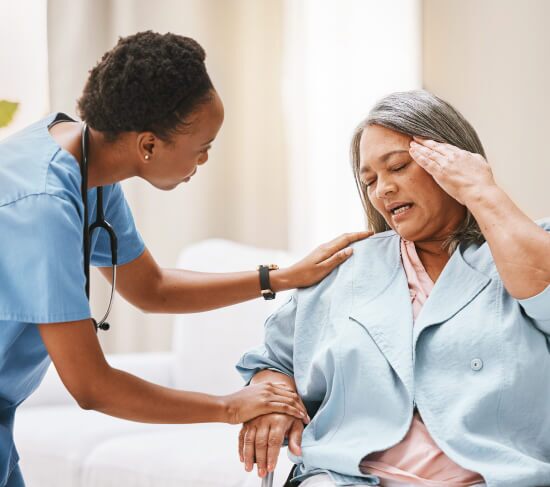
In-Home Traumatic Brain Injury (TBI) Care

Recovering from a Traumatic Brain Injury (TBI) is a journey that requires patience, consistency, and specialized support. At Ohana Care, we provide compassionate in-home care designed to help individuals navigate the cognitive, physical, and emotional challenges of brain injury recovery, empowering them to regain independence in the comfort of their own home.

Ohana Care Is Proudly Accredited by Accreditation Canada

We take pride in providing trusted, accredited in-home care your family can count on.

Accredited with Accreditation Canada!

What is Traumatic Brain Injury Home Care?

A TBI can change how a person thinks, moves, and feels. Traumatic Brain Injury home care is about physical safety and providing the structured support needed to relearn skills, manage behavioural changes, and cope with cognitive fatigue.

Restoring Routine icon

Restoring Routine

The brain heals best with predictability. Our caregivers help establish and maintain a consistent daily routine, which is crucial for reducing anxiety and improving cognitive function.

Supporting Cognitive Recovery icon

Supporting Cognitive Recovery

Memory loss and difficulty concentrating are common after a TBI. We provide gentle reminders, help with organization, and support clients in practicing the cognitive exercises prescribed by their rehabilitation team.

Providing Patience and Understanding icon

Providing Patience and Understanding

We understand that mood swings, frustration, and impulsivity can be part of the brain injury. Our caregivers are trained to handle these behavioural changes with calmness, empathy, and de-escalation techniques, ensuring a supportive environment.

Caregiver caring on an elderly man

Your Trusted Provider For Traumatic Brain Injury Home Care Assistance

Ohana Care understands that every brain injury is unique and requires a personalized approach to care. Our in-home support services include, but are not limited to:

  • Routine Management: Creating and sticking to a daily schedule to reduce confusion and mental fatigue.
  • Medication Reminders: Ensuring medications are taken on time to prevent missed doses or double-dosing due to memory lapses.
  • Companion Care: Providing social interaction and emotional support to combat the isolation and depression that often follow a TBI.
  • Safety Supervision: Monitoring for safety awareness, especially if impulsivity or balance issues are present.
  • Life Skills Support: Assisting with relearning daily tasks such as meal preparation, light housekeeping, and personal grooming.
  • Transportation: Helping with safe accompaniment to medical appointments, rehabilitation therapies, and community outings.

Signs You or Your Loved One Needs TBI Support

Cognitive Fatigue icon

Cognitive Fatigue

Becoming easily overwhelmed, exhausted, or irritable after short periods of mental activity or social interaction.

Memory Challenges icon

Memory Challenges

Forgetting appointments, misplacing items, or repeating questions frequently and within a short time.

Emotional Volatility icon

Emotional Volatility

Having sudden mood swings, outbursts of anger, or tearfulness that are out of character and difficult to manage alone.

Sensory Overload icon

Sensory Overload

Experiencing a sensitivity to light, noise, or busy environments that leads to agitation or withdrawal.

Difficulty Initiating Tasks icon

Difficulty Initiating Tasks

Sitting for long periods without starting necessary activities such as eating or dressing (executive dysfunction).

Why Choose Ohana Care For Traumatic Brain Injury Home Care Services?

Ohana Care offers flexible, compassionate care without long-term contracts. Recovery from a brain injury is often non-linear. You may need significant support initially and less as independence returns. We adapt our schedule to match your recovery journey.

Qualified Caregivers

At Ohana Care, we select caregivers who possess the patience and emotional resilience required for traumatic brain injury home care. Our team understands that behavioural changes are symptoms of the injury, not the person. We match you with professionals who can provide a calm, steady presence to help ground you or your loved one during difficult moments.

Caregiver with a patient

Additional Resources

Brain Injury Canada

A national organization providing education, advocacy, and resources for the brain injury community.

Southern Alberta Brain Injury Society (SABIS)

A Southern Alberta organization offering lifelong support and services for adults with acquired brain injuries and their families.

Brain Injury Alliance (British Columbia)

A network of non-profit brain injury associations providing support and advocacy across BC.

Supporting a loved one with a TBI can be emotionally exhausting. Our respite services allow you to take a break and recharge, knowing your loved one is in safe, capable hands.

Frequently Asked Questions

Yes. While we do not replace your occupational or physical therapists, our traumatic brain injury home caregivers can support you in completing your "homework" exercises. We can provide the encouragement and supervision needed to ensure the recovery plan stays on track.

Yes. We understand that behavioural changes are a common symptom of traumatic brain injuries. During our initial assessment, we will discuss specific triggers and de-escalation strategies that work best for your loved one. We match you with caregivers who are patient, calm, and experienced in managing challenging behaviours.

Absolutely. If your loved one wanders, has severe memory impairment, or is unsafe to be left alone, we can provide 24-hour care (including overnight awake staff) to ensure their safety around the clock.

Yes. Our caregivers can drive you or your loved one to medical and rehabilitation appointments. They can also take notes during the appointment if requested, to help you remember the doctor's instructions.

No. We have no long-term contracts. At Ohana Care, we only require a 4-hour minimum per visit. This flexibility for brain injury care at home allows you to adjust our services as your loved one recovers and regains independence.

Yes. Many TBI survivors struggle with planning and organizing. Our caregivers can act as an "external brain," helping to break down complex tasks (such as grocery shopping or meal prep) into manageable steps to reduce frustration and build confidence.

Trust Ohana Care With Your Traumatic Brain Injury Home Care Services

Let Ohana Care support you or your loved one for an enhanced quality of life with a TBI. If you’re ready to accept additional support, we encourage you to fill out the form.

Telephone icon

Call us (Calgary)

Telephone icon

Call us (Edmonton)

Telephone icon

Call us (Vancouver)

Telephone icon

Call us (Vancouver Island)

Jobseeker icon
Looking for a career in caregiving?

This form is for care inquiries only.
Job applications submitted here will not be reviewed.

CONTACT INFORMATION:

TOP
Navigation >
Ohana Care